2026-10-23 ·
Matching Roofing Materials to Older Acton Neighborhoods
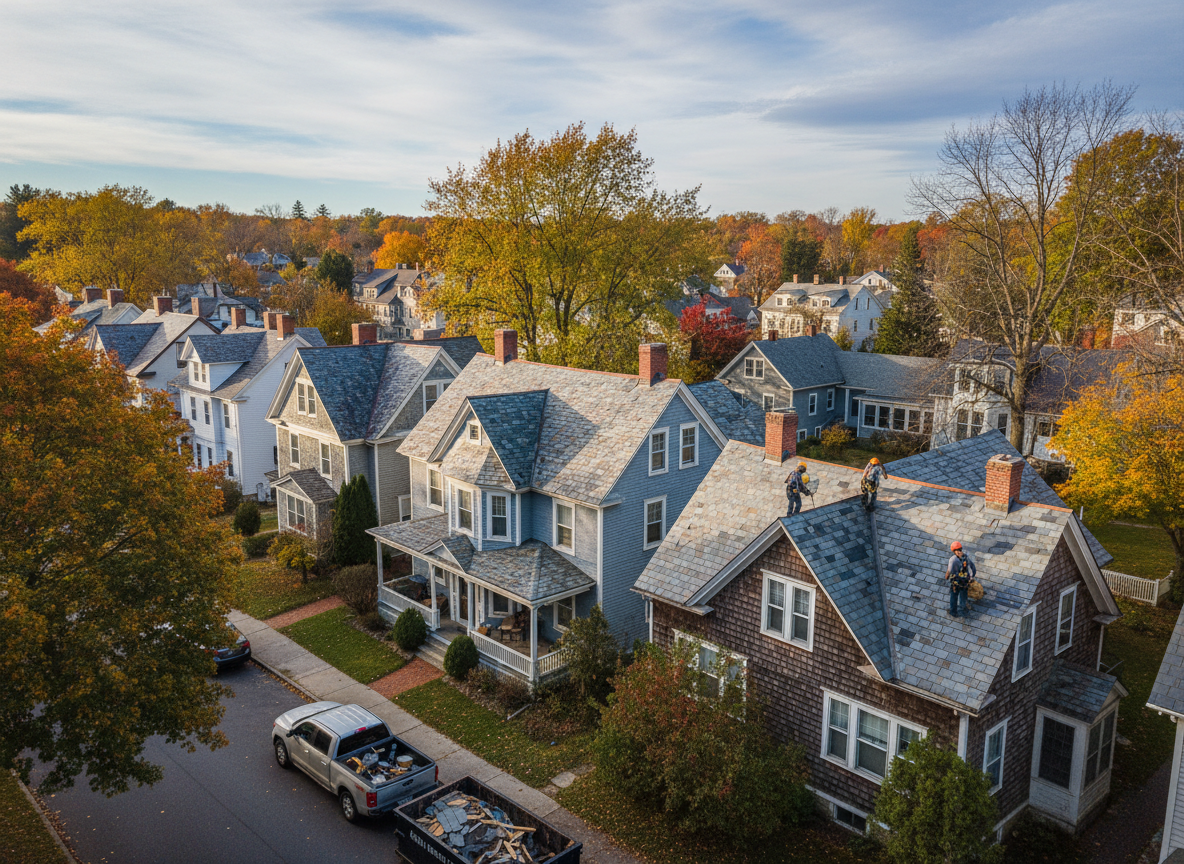
Older Acton neighborhoods built before 1950, including homes along the Great Road Historic District and in Acton Center, match best with slate or architectural asphalt shingles that align with original roof profiles and withstand cold winters dropping below freezing for months.
Housing Stock and Terrain in Acton Neighborhoods
Acton Center and West Acton feature predominantly wood-frame homes from the 1800s and early 1900s with steep pitches that shed snow effectively during Middlesex County winters. These structures often sit on gently rolling terrain with clay-heavy soils that retain moisture, increasing the risk of ice dam formation along eaves when temperatures fluctuate between 20 and 40 degrees. South Acton and East Acton include later additions from the 1920s that use similar pitches but sit closer to wetlands, where humidity accelerates shingle granule loss. Matching materials starts with assessing pitch and underlayment needs rather than forcing modern low-slope products onto these roofs. Proper ventilation becomes critical because warm summer days in the 80s create condensation cycles inside unvented attics common in these older builds.
Climate Impacts on Material Longevity
Humid continental conditions bring heavy snow loads and freeze-thaw cycles that shorten the life of standard three-tab shingles to 12-15 years on north-facing slopes in Littleton and Boxborough border areas. Slate roofs installed on Concord Road properties have lasted 80-100 years when properly flashed, while asphalt shingles in the same locations require replacement every 20-25 years. Warm summers accelerate UV degradation on south exposures, making granule-shedding a visible sign that replacement is due. Metal panels can handle the temperature swings but often clash visually with the historic character of East Acton farmhouses. Ice and water shield must extend at least 6 feet up the roof plane in these neighborhoods to prevent leaks during January thaws.
Material Recommendations by Neighborhood
Acton Center homes near the arboretum benefit from natural slate or synthetic slate replicas that replicate the original appearance while adding modern underlayment. West Acton properties with asphalt roofs see good results from 30-year architectural shingles rated for 130 mph winds, which handle nor'easters common to the region. South Acton and East Acton roofs near Great Road often pair best with laminated shingles that offer deeper shadows matching Victorian details. Avoid lightweight three-tab products on any pre-1940 home because they lack the stiffness needed for the steeper pitches. Always inspect flashing at chimneys and valleys first, since those details fail before the field shingles in local conditions.
Practical Steps for Material Selection
Begin with a full inspection that measures pitch, checks for rot at eaves, and notes existing ventilation. Compare the weight of slate against the rafter capacity on 19th-century homes before committing to that option. Review color and texture samples against neighboring roofs in the Great Road Historic District to maintain consistency. Factor in removal costs for multiple layers, which add $1.50-$2.50 per square foot on older Acton properties. Coordinate new gutters sized at 5 inches to manage the increased runoff from larger roof planes during spring rains. Slate roofing and asphalt shingle roofing both appear frequently on these homes when matched correctly. Homeowners can review cost variables in the article What Influences the Price of Roof Replacement in Acton before final decisions.