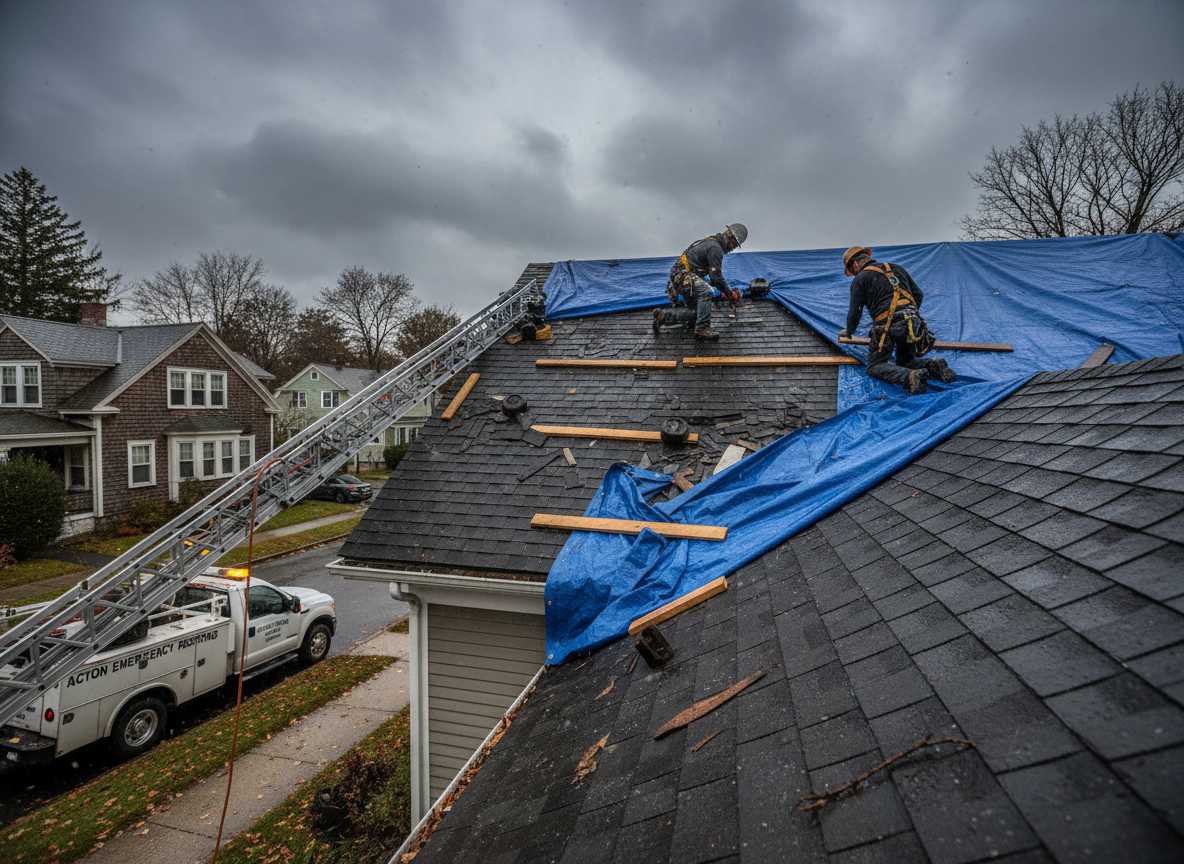
Acton sits in Middlesex County with a humid continental climate that brings heavy snow loads and repeated freeze-thaw cycles each winter. These conditions frequently cause ice dams along eaves in older homes found in the Great Road Historic District and neighborhoods such as West Acton and South Acton. Emergency calls often involve locating active leaks under snow-covered asphalt shingles or older slate roofs while protecting interior finishes from further water intrusion.
Nearby towns like Concord, Littleton and Boxborough share similar housing stock and terrain, so crews routinely travel between these areas on the same night during nor'easters. Temporary tarping must account for steep pitches common on historic properties and the risk of additional sliding snow. Permanent repairs wait until safe access is possible, yet the initial visit always includes a full roof scan to identify hidden damage that could worsen once temperatures rise.
Homeowners in East Acton and Acton Center often discover issues only after water stains appear on ceilings because many roofs date from the 1970s through 1990s and lack modern ice-and-water shield at the eaves. Quick dispatch from the Farm Hill Plaza location allows crews to reach most streets inside thirty minutes even during storms. Every job begins with clear communication about what temporary measures will hold until full replacement or section repair can be scheduled.
Technician insight
In Acton the thing that catches most people out with Emergency roofing service is how fast ice dams form on the north-facing eaves of 1970s and 1980s homes in West Acton once temperatures swing above freezing during the day and drop again at night. The meltwater finds every gap in older flashing around chimneys near the Great Road Historic District before homeowners notice anything inside.
Ice Dam Leak After Overnight Snow
A homeowner in South Acton called after water appeared near a second-floor skylight following a heavy March snowfall. Crews found a three-foot ice dam along the rear eaves that had forced water under the shingles. They removed the dam safely, installed temporary flashing seals and documented the section for later full replacement once the roof dried.
How it works
- 1
Initial Call and Dispatch
Answer the 24/7 line, gather details on the leak location and weather conditions, then send the nearest crew from the Acton base.
- 2
On-Site Safety Assessment
Inspect roof access, snow load and structural concerns before any work begins on homes in Acton Center or surrounding neighborhoods.
- 3
Temporary Leak Control
Apply tarps, seal flashing or remove ice dams to stop active water entry while documenting all visible damage.
- 4
Full Report and Next Steps
Provide the homeowner with photos, findings and a clear plan for permanent repair once conditions allow safe work.
Pricing
Upfront quotes given on site before any permanent work begins; emergency response itself is billed by time and materials.