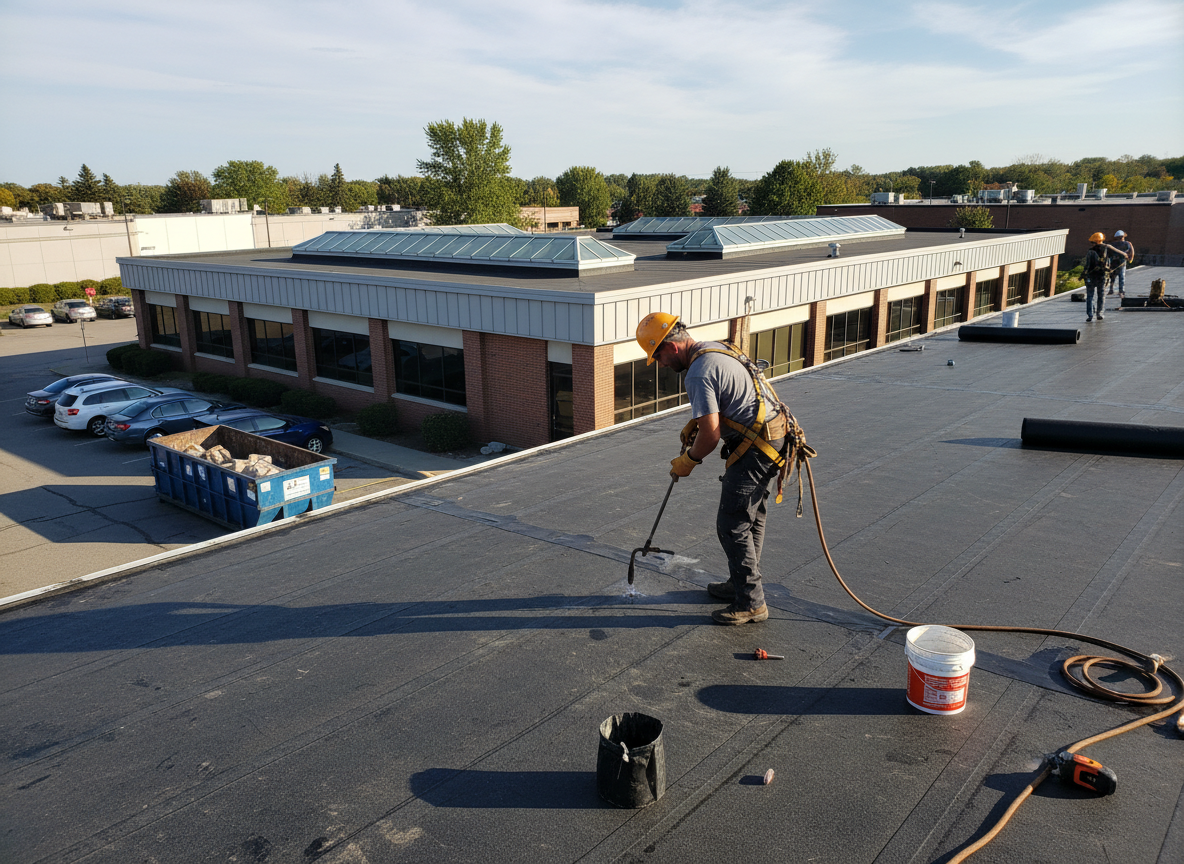
Commercial roofs in Acton face unique stresses from the region's humid continental climate, with repeated freeze-thaw cycles and heavy snow accumulation that can compromise membrane integrity on flat and low-slope systems. Buildings in Acton Center and the Great Road Historic District often feature older masonry or steel structures that require careful flashing details around parapets and HVAC penetrations to prevent water intrusion during warm summer downpours. Luminex Gable evaluates existing substrates, drainage patterns and code requirements in Middlesex County before recommending systems such as reinforced TPO or EPDM that hold up under snow load and thermal movement. Proper edge detailing and insulation upgrades also help control energy costs in commercial spaces that run year-round.
Work on commercial properties near Littleton and Boxborough borders frequently involves coordinating with tenants and property managers to minimize disruption during re-roofing. Crews must account for the terrain around South Acton and East Acton where runoff can pool against foundation walls if scuppers and internal drains are not sized correctly. Material choices are guided by wind exposure on exposed commercial sites and the need for fire-rated assemblies in mixed-use zones. Regular inspections catch issues like seam separation or ponding before they lead to interior damage in retail or office spaces common throughout Acton.
Local regulations in Middlesex County require permits and inspections for commercial roofing projects, especially when altering drainage or adding insulation that changes the roof profile. Luminex Gable handles documentation for properties along Great Road and in West Acton where historic district guidelines may influence visible edge treatments. Seasonal timing matters because spring and fall offer the most stable weather windows before winter snow arrives or summer heat affects adhesive curing. Detailed documentation of existing conditions protects both the building owner and the contractor when unexpected deck deterioration is uncovered during tear-off.
Technician insight
In Acton, the thing that catches most people out with Commercial Roofing is how quickly snow melt refreezes around poorly detailed drains on older flat roofs near the Great Road Historic District, turning small leaks into major deck damage before spring.
Retail Plaza Roof in West Acton
Ponding water was reported along the rear elevation of a strip retail building after a heavy spring thaw. Inspection revealed separated seams and clogged internal drains caused by years of leaf debris. The crew replaced the affected membrane sections, cleared and resized the drains, and added tapered insulation to improve flow. The property has remained dry through the following winter and summer seasons.
How it works
- 1
Site Assessment
Inspect the existing commercial roof, document drainage, penetrations and substrate condition while noting snow load and wind exposure specific to the Acton site.
- 2
Material and System Selection
Recommend membrane type, insulation and flashing details suited to Middlesex County freeze-thaw cycles and the building's occupancy.
- 3
Permit and Coordination
Secure required Middlesex County permits and schedule work around tenant operations to limit business interruption.
- 4
Installation and Quality Check
Install the system with attention to seams, edges and drains, then perform water testing and final inspection before turnover.
Pricing
Upfront quotes provided after on-site inspection; final cost depends on roof size, existing conditions and chosen system.