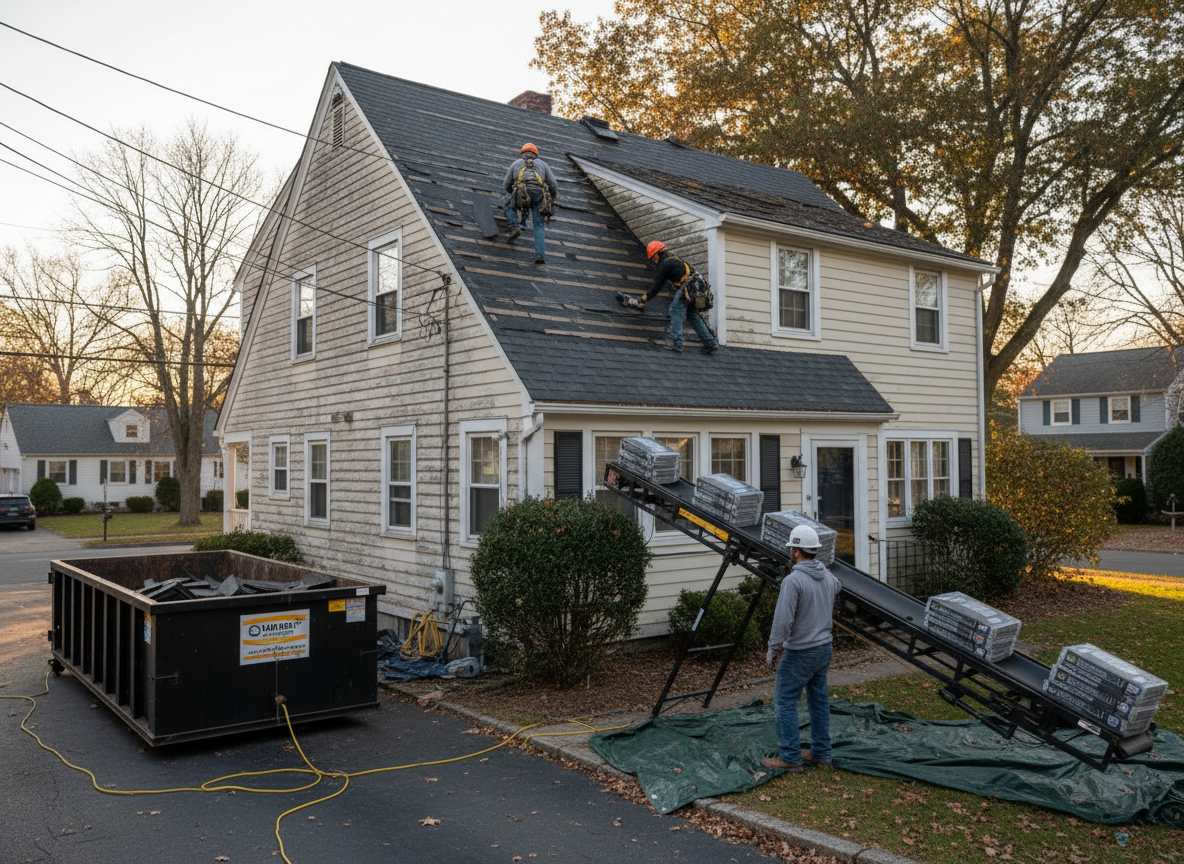
Acton homes in neighborhoods like Acton Center and East Acton often feature older wood-frame construction from the early to mid-20th century, with steep pitches that collect heavy snow during the humid continental winters. Ice dams form along eaves when warm attic air melts roof snow that then refreezes at the colder edges, forcing water under shingles and into attics. Proper ventilation and ice-and-water shield placement along the lower courses become essential to prevent repeated leaks that homeowners in nearby Concord and Littleton also report after successive freeze-thaw cycles.
Great Road Historic District properties add another layer: many roofs sit on structures that predate modern code requirements for underlayment and flashing details. Replacing asphalt shingles here requires matching existing ridge lines and eave overhangs while satisfying Acton building department inspections. Metal drip edge must extend properly under the starter course, and step flashing at every chimney or wall intersection needs to integrate with existing siding rather than simply overlaying it.
Terrain around South Acton and West Acton includes gentle slopes and wooded lots that funnel runoff toward foundations during spring thaws. Gutter integration and proper valley flashing therefore matter more than in flatter inland areas. Crews must also account for limited staging space on narrow driveways common to these neighborhoods when ordering delivery of bundles and underlayment rolls.
Technician insight
In Acton, the thing that catches most people out with Residential Roofing is underestimating how quickly ice dams form on the north-facing slopes of older homes near the Acton Arboretum. Those 1940s and 1950s capes in West Acton trap heat poorly, so even modest insulation gaps turn a routine shingle job into a full valley rebuild after the first January thaw.
Ice Dam Leak on a 1952 Cape in West Acton
Water stains appeared on second-floor ceilings after a week of freeze-thaw cycles. Inspection revealed missing ice-and-water shield along the north valley and compressed insulation at the eaves. We removed the affected shingles, added extended shield and new ridge venting, then reinstalled matching architectural shingles. No further leaks appeared the following winter.
How it works
- 1
On-Site Assessment
Measure roof planes, note existing ventilation, and check for prior ice-dam damage while walking the property in Acton Center or nearby Boxborough.
- 2
Material and Code Review
Select shingles rated for snow load, confirm ice-and-water shield requirements, and verify flashing details against Middlesex County permitting rules.
- 3
Tear-Off and Deck Inspection
Remove old layers, replace any rotted sheathing, and install new underlayment before the weather window closes.
- 4
Installation and Final Walk
Lay shingles, flash all penetrations, and walk the finished roof with the homeowner to confirm drainage and ridge ventilation.
Pricing
Upfront written quotes based on square footage, pitch, and material choice for each Acton address.