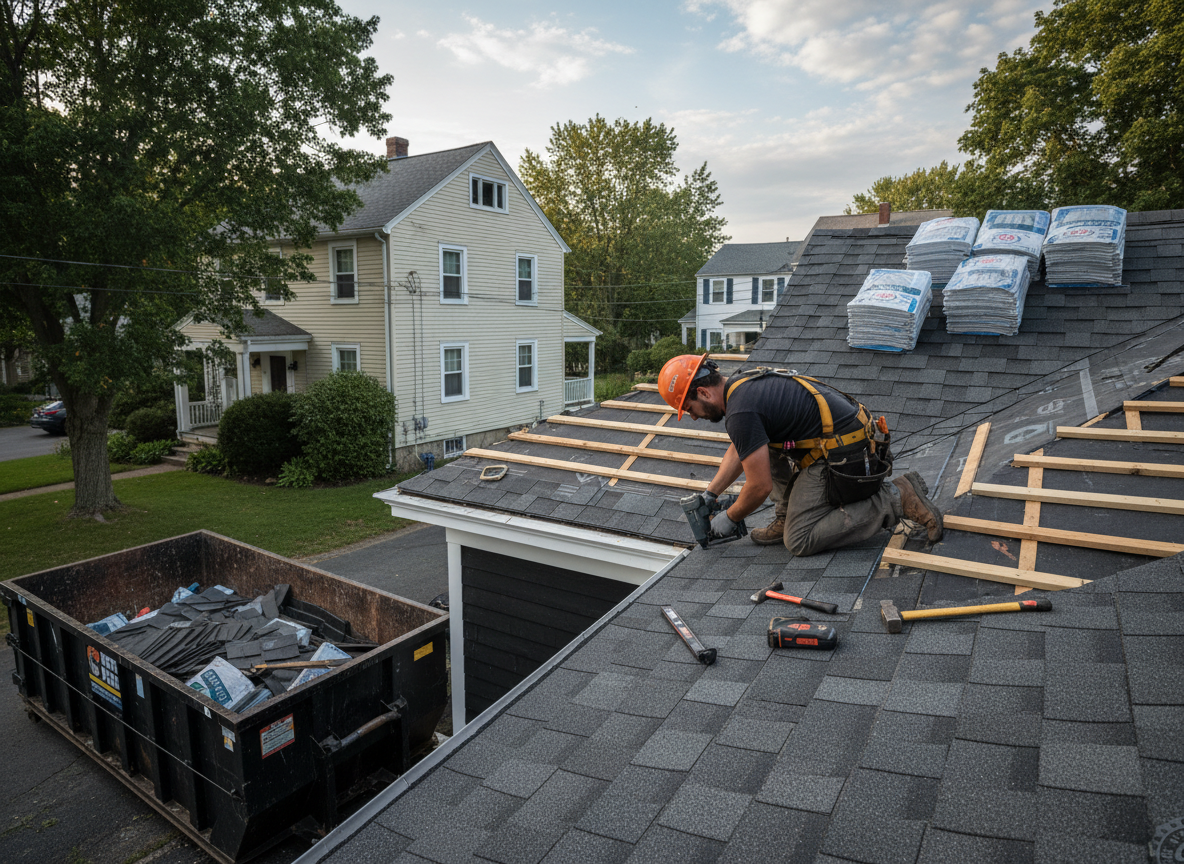
Acton homes in neighborhoods like East Acton and South Acton often feature asphalt shingle or cedar shake coverings on roofs that date back decades. Cold winters bring heavy snow loads and ice dam risks that demand proper underlayment, ice-and-water shield at eaves, and ridge ventilation to prevent moisture buildup. Skipping these steps leads to premature failure when temperatures swing from freezing nights to warmer days.
In the Great Road Historic District and nearby streets in Concord or Littleton, many structures have steeper pitches and complex valleys that trap debris and accelerate wear. Roof covering work here requires matching existing flashing details and ensuring drip edges extend correctly to handle runoff during spring thaws. Homeowners frequently overlook attic insulation gaps that turn minor leaks into widespread sheathing rot.
Middlesex County building practices emphasize wind uplift resistance and proper nailing patterns for the region's occasional nor'easters. When replacing coverings, crews must inspect decking for rot caused by prior leaks and address any soffit obstructions that block intake air. These details separate jobs that last twenty years from those needing callbacks after the first heavy winter.
Technician insight
In Acton, the thing that catches most people out with roof covering is poor attic ventilation on capes and colonials in West Acton and Acton Center. Our winters push ice dams right up under the shingles when soffits are blocked or insulation sits against the deck, and homeowners usually discover it only after water stains appear on ceilings.
Shingle Failure on South Acton Cape
Homeowner noticed leaks during spring melt. Inspection revealed missing underlayment and blocked soffits allowing ice dams to form along the north eaves. We removed two layers, replaced rotted decking, added ice-and-water shield and ridge vent, then installed new shingles with proper flashing. No further leaks through the next winter.
How it works
- 1
Site Assessment
Walk the roof and attic to check existing covering condition, ventilation, and ice dam history specific to the property's exposure.
- 2
Material Selection
Choose underlayment, shingles, and flashing suited to Acton's freeze-thaw cycles and the home's pitch and age.
- 3
Tear-Off and Deck Prep
Remove old layers, replace damaged sheathing, and install ice-and-water membrane at eaves and valleys.
- 4
New Covering Installation
Apply underlayment, shingles, ridge vent, and all flashing with attention to nailing patterns for local wind loads.
- 5
Final Inspection
Verify ventilation, drainage, and sealants before cleanup and walkthrough with the homeowner.
Pricing
Upfront quotes after inspection; cost driven by roof size, layers to remove, pitch, and access in Acton neighborhoods.