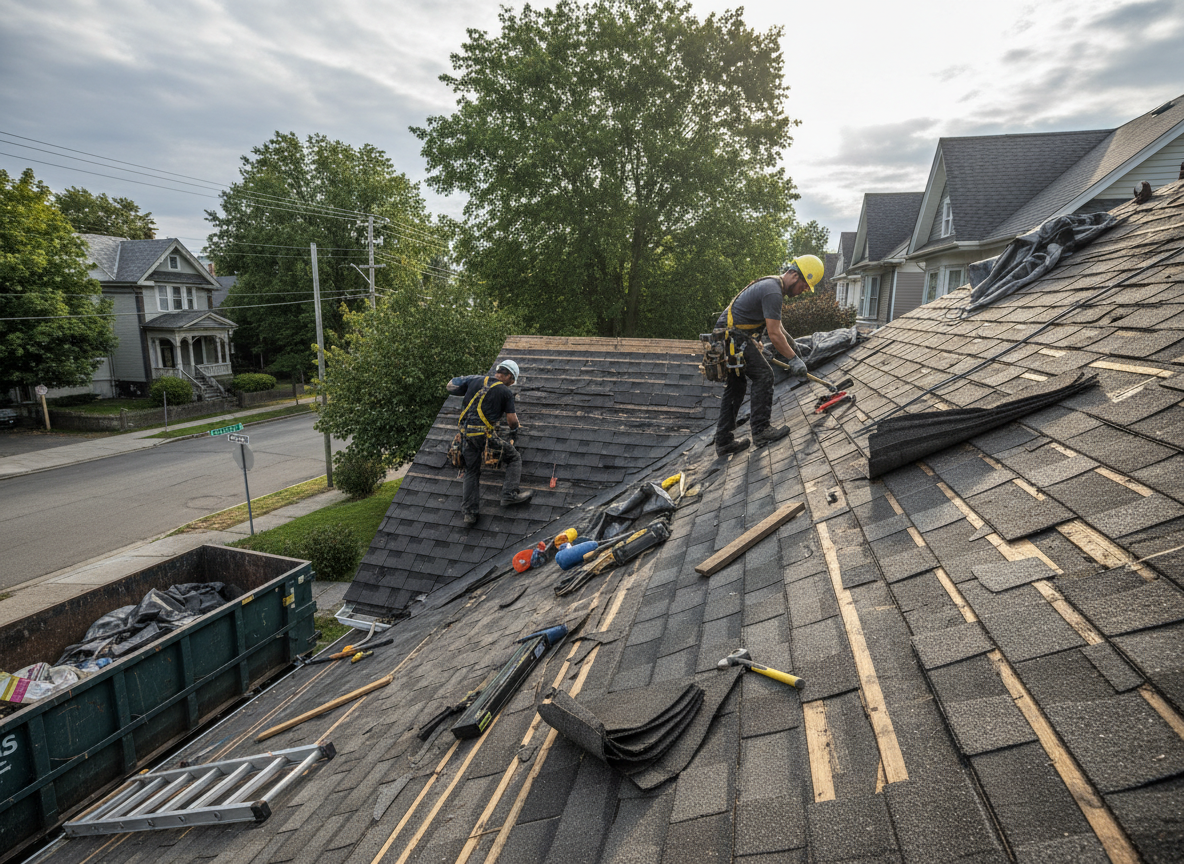
Acton sits in Middlesex County with a humid continental climate that brings cold winters, heavy snow loads, and occasional nor'easters. Homes in Acton Center, West Acton, South Acton, and East Acton often feature asphalt shingle roofs on 1970s-1990s builds that take repeated hits from wind-driven rain and ice. Storm damage frequently shows as lifted shingles, dented flashing, or compromised underlayment around chimneys and valleys. Unchecked, these spots allow water to reach sheathing during spring thaws, especially on properties near the Great Road Historic District where tree cover can hide early signs.
Repairs here start with a full slope inspection that checks for hidden granule loss from hail and split seams from freeze-thaw cycles. Crews replace damaged sections with matching shingles rated for high wind, reseal step flashing, and restore ridge vents that commonly fail when branches fall. Work in neighborhoods bordering Concord, Littleton, and Boxborough must also respect local setbacks and drainage patterns that funnel runoff toward foundations on sloped lots. Owner-operated teams at Luminex Gable provide 24/7 response from the Farm Hill Plaza location so emergency tarping happens the same day a storm passes.
Edge cases include older underlayment that has lost flexibility after decades of temperature swings and metal drip edges that corrode faster near wooded lots. Proper repair means removing at least three courses above the damaged area to blend the patch and prevent future wind entry points. Homeowners in South Acton and East Acton see the most repeat issues when repairs skip the ice barrier layer required along eaves in this climate zone.
Technician insight
In Acton, the thing that catches most people out with Storm damage roof repair is ice dam backup behind the gutters on older homes in West Acton and South Acton. The cold winters push meltwater under shingles even when the visible tear is small, and skipping the ice barrier layer during repair guarantees a callback the next freeze.
East Acton Roof After Heavy Snow and Wind
A branch from a nearby tree split during a nor'easter and tore shingles on the north slope of a 1980s home near the Acton Arboretum. Inspection showed the underlayment had pulled away at the valley and water had reached the sheathing. We removed three courses of shingles, replaced the damaged felt and step flashing, and added new ice barrier along the eaves. The roof stayed dry through the next thaw.
How it works
- 1
Initial Assessment
Inspect all slopes, valleys, and penetrations for wind lift, hail dents, and ice damage using ladders and binoculars from the ground where possible.
- 2
Documentation and Scope
Photograph affected areas, note any sheathing exposure, and outline replacement sections that match existing shingles and ventilation.
- 3
Temporary Protection
Install tarps or reinforced underlayment to stop active leaks before permanent materials arrive.
- 4
Targeted Repair
Remove and replace damaged shingles, flashing, and underlayment, then restore ridge vents and seal all edges against future wind-driven rain.
- 5
Final Walkthrough
Check drainage, confirm no loose debris remains, and review the repaired sections with the homeowner.
Pricing
Upfront quotes after on-site inspection; cost varies with roof pitch, extent of hidden damage, and material match required.