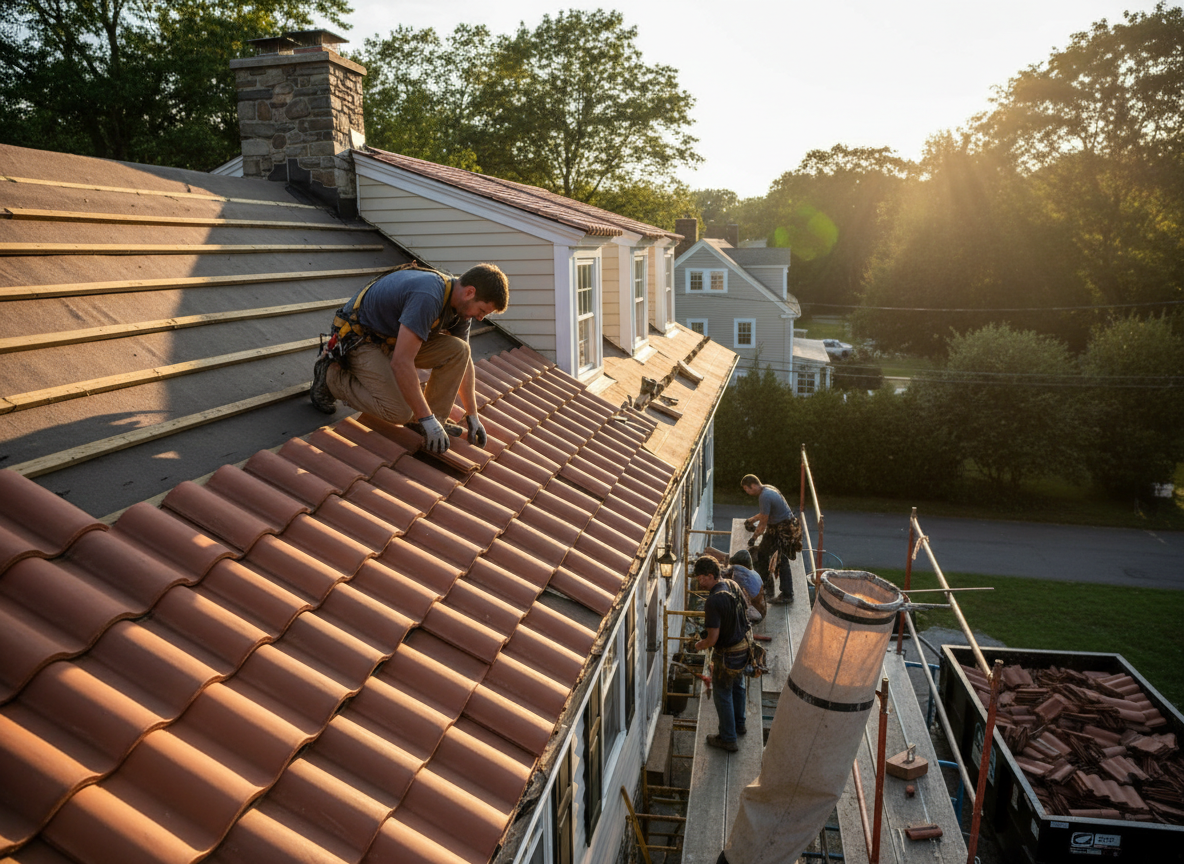
Tile roofs on homes in Acton Center and the Great Road Historic District often date back decades and carry heavy clay or concrete tiles that demand careful structural assessment before any replacement begins. Cold winters in this humid continental climate create repeated freeze-thaw cycles that crack tiles and push water under the underlayment, especially on south-facing slopes where snow melts and refreezes overnight. Replacing tiles here requires matching the original profile while upgrading the decking and ventilation to handle the weight and moisture loads common in Middlesex County.
Contractors working near the Acton Arboretum and in West Acton frequently encounter homes with limited access due to mature trees and narrow driveways that complicate staging materials and equipment. Removing the old tile without damaging underlying rafters is critical on these older properties, as many lack modern truss systems. Proper ice-and-water shield application along eaves and valleys becomes essential to prevent leaks during the heavy spring thaws that follow Acton's long winters.
Nearby towns like Concord, Littleton, and Boxborough share similar housing stock and weather patterns, so crews often transport the same reinforced underlayment and ridge-vent systems used in Acton. Homeowners replacing tile must also consider updated fastening requirements to meet current wind-load standards in this region, where summer thunderstorms can bring sudden gusts. Skipping these steps leads to premature failure within a few seasons.
Edge cases arise when tile roofs intersect with chimneys or skylights added over the years; flashing details must be rebuilt to avoid trapping moisture against the masonry common in East Acton homes. Always inspect for rot in the sheathing caused by previous inadequate ventilation before installing new tiles.
Technician insight
In Acton, the thing that catches most people out with tile roof replacement is underestimating how the freeze-thaw cycles in our humid continental winters crack tiles and rot the sheathing on older homes near the Great Road Historic District. Homeowners often skip checking rafter strength before ordering new heavy tile, which creates real problems on properties in Acton Center and West Acton that were built before modern load standards.
Tile Failure After Multiple Winters
A South Acton homeowner noticed recurring leaks around the chimney after several cold seasons. Inspection revealed cracked tiles and deteriorated underlayment from repeated ice damming. The crew removed the old system, reinforced the deck, installed upgraded ice shield, and replaced with new tiles matched to the historic profile. The roof now handles Acton's winter cycles without further intrusion.
How it works
- 1
Initial Assessment
Inspect the existing tile condition, decking, and structural support on Acton homes while noting access limitations from trees or slopes.
- 2
Old Tile Removal
Carefully strip tiles and underlayment, checking rafters for damage common after decades of freeze-thaw exposure in Middlesex County.
- 3
Deck Preparation
Repair or replace sheathing, add ice-and-water shield at eaves and valleys, and improve ventilation for local winter conditions.
- 4
New Tile Installation
Install underlayment and new tiles with upgraded fasteners suited to Acton's wind and snow loads, finishing with ridge details.
- 5
Final Inspection
Check all flashings, seals, and drainage before cleanup to ensure performance through New England seasonal shifts.
Pricing
Cost depends on roof size, tile material, access difficulty in wooded Acton neighborhoods, and any deck repairs needed after winter damage.